
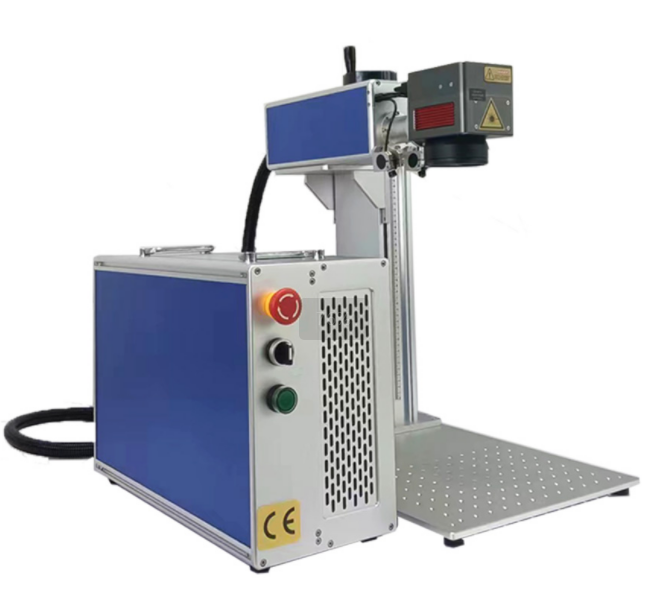
Ao usar uma máquina de marcação a laser de fibra de 50w/60w/100w para cortar 0,3 mm de cobre de espessura, pay attention to the following key points to optimize the cutting effect:
Parameter setting
Laser power: As a highly reflective material, copper needs to increase the laser power appropriately to ensure cutting penetration, but avoid excessive power that causes material melting or damage to the equipment. It is recommended to adjust to the optimal power range according to the equipment manual and test results.
Cutting speed: To ensure cutting accuracy and penetration, the cutting speed needs to be slowed down and kept stable. Too fast speed may result in incomplete cutting or rough edges, while too slow speed may increase the heat-affected zone.
Auxiliary gas selection: Oxygen is recommended as the auxiliary gas for copper cutting to increase the cutting speed and effect through oxidation reaction. For extremely thin materials (such as 0.3mm), the gas pressure and purity need to be strictly controlled to avoid excessive oxidation.
Frequency adjustment: Appropriately reducing the frequency can reduce the laser point density, reduce the risk of heat accumulation, and ensure the continuity of the cutting line. Test optimization is required based on material thickness and equipment performance.

Equipment and operation optimization
Equipment selection: Lasers with anti-high reflection function are preferred, which can effectively reduce the damage of reflected light to the equipment and improve cutting stability and life.
High-power fast perforation: High-power fast perforation technology is used at the beginning of cutting to ensure that the power is reduced immediately after penetration to maintain the cutting process and reduce the heat-affected zone.
Focal length calibration: Accurately adjust the focal length of the cutting head according to the material thickness to ensure that the laser beam is focused on the material surface to improve cutting accuracy and efficiency.
Material pretreatment, fixation and safety protection
Material fixation: Use special clamps or vacuum adsorption devices to fix the copper material to prevent displacement during cutting, resulting in accuracy deviation or equipment collision.
Material pretreatment:
Surface blackening treatment: Graphite or special light-absorbing coating (such as ink) is applied to temporarily reduce the reflectivity (be careful to avoid contaminating optical components)
Roughened surface: Slight grinding or chemical treatment increases surface scattering and improves laser absorption
Safety protection: Wear special goggles during operation to avoid direct laser irradiation of the eyes or skin; ensure that there are no flammable and explosive materials around the equipment, and turn on the exhaust system to remove toxic fumes.
Conclusão
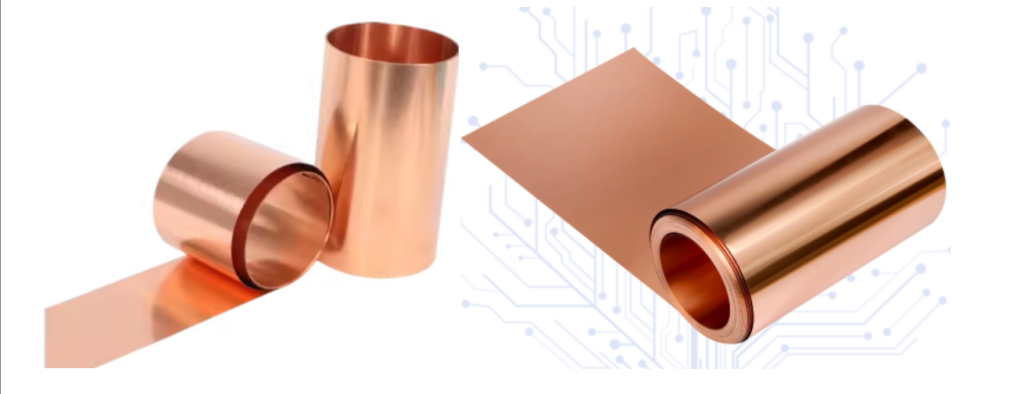
Resumidamente, if you want to cut copper foil with a thickness of about 0.3mm, it is recommended to use a smaller lens such as a (110*110milímetros) Lente F-Teta, so that the laser focus spot is smaller and it is easier to cut copper foil. You also need to clean the lens regularly, pay attention to the reflection of the laser when cutting, and pay attention to long-term high-load cutting work.
Welcome to contact GuangZhou Focuslaser Laser Technology Co., Ltda. at any time. We are very glad to answer your questions about fiber laser
