
Introdução
Imagine you need a technology that can mark delicate electronics without causing a scratch, etch logos onto fine jewelry without fading, or even print expiration dates on packaging that stays clear and readable for months. This is where a UV laser machine steps in, a tool known for its precise, gentle, and long-lasting markings. Ao contrário dos métodos tradicionais, UV laser marking doesn’t require ink or physical contact, which means it is ideal for delicate surfaces and leaves a permanent mark that won’t fade or wear out easily.
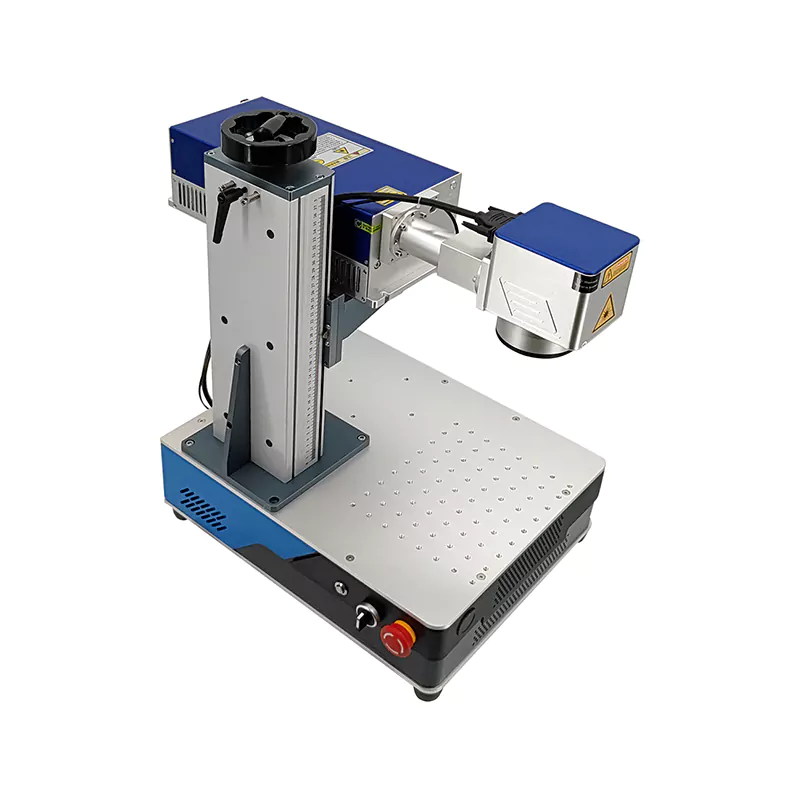
UM UV laser machine uses ultraviolet light at a wavelength of 355 nanometers to create high-resolution markings. This short wavelength allows for a “cold marking” process, meaning it operates with minimal heat, preventing damage to sensitive materials. The UV laser beam’s pinpoint accuracy enables it to create fine details, whether it’s barcodes, Logos, or serial numbers, across a wide range of materials.
But where do these machines find the most use? From electronics to automotive parts, these specialized lasers have applications in various industries. Let’s explore some of the most interesting ways companies are putting UV laser devices to work and why this technology is becoming a staple in advanced manufacturing.
Applications of UV Laser Machines
Electronics Industry: Precision for Small Parts
In the electronics industry, where components like circuit boards and semiconductors are getting smaller and more intricate, precision marking is crucial. UV laser can mark these tiny parts with high accuracy, leaving serial numbers, códigos de barra, or brand logos without damaging delicate circuits. Since UV lasers create clear, high-contrast markings, they’re perfect for adding information to electronic components that require traceability. Por exemplo, barcodes and QR codes on microchips help with inventory tracking and quality control, which is essential to keep up with demand.
Além disso, the non-contact nature of UV laser technology ensures there’s no wear and tear on the materials, which can be especially important for parts that must retain their integrity over time. The machine’s versatility extends to marking on different materials commonly used in electronics, such as plastics, cerâmica, e até vidro. This flexibility makes these laser machines a valuable asset for electronics manufacturers, as they can adapt the same technology across multiple stages of production.
But how does this compare to other industries? Let’s see how these laser machines play a role in the medical field, where safety and compliance are vital.
Medical Devices: Safe and Compliant Marking
In healthcare, safety, precisão, and regulatory compliance are essential for medical devices. UV laser devices excel in this field by creating permanent and safe markings on surgical tools, implantes, and diagnostics equipment. Since these markings are resistant to wear and do not interfere with the material’s surface, they’re perfect for applications where sterility and biocompatibility are critical. Por exemplo, a UV laser can mark a surgical instrument with batch numbers or expiration dates, ensuring that the device is traceable throughout its lifespan without risking contamination.
These laser machines can handle the various materials used in medical devices, incluindo metais, plásticos, e cerâmica. This flexibility allows manufacturers to use one type of marking system across different equipment, streamlining the production process and ensuring consistency. Adicionalmente, the high precision of UV laser marking allows for the clear legibility of even the smallest text, which is necessary for meeting medical regulations that require detailed information on each item.
Próximo, let’s look at the automotive industry, where durability and performance under extreme conditions are key requirements.
Automotive Industry: Durability and Traceability Under Pressure
In the automotive sector, each part must withstand extreme conditions, from high temperatures to constant vibrations. Aqui, premium UV laser machines are essential for marking parts like engine components, VIN (Vehicle Identification Number) plates, and other critical parts with details that need to be readable throughout a car’s life. Whether it’s tracking parts during production or identifying them during maintenance, laser marking ensures that these essential details remain intact and legible over time.
The automotive industry also benefits from the UV laser’s ability to perform non-contact marking, meaning parts can be engraved without physical pressure that could wear them down. This is especially valuable for high-wear parts, like brake systems or transmission components, where any compromise in material strength could affect performance. Além disso, UV laser devices are often used to cut and drill intricate patterns, which are useful for creating gaskets, dashboards, and even aesthetic details on vehicle interiors. The technology’s versatility in cutting and marking materials like rubber, plástico, and metal has made it an indispensable tool for modern automotive production.
Com essas vantagens, it’s no surprise that laser UV machines are making their mark on vehicles worldwide. But what about more delicate surfaces, like those found in jewelry? Let’s see how these machines handle fine craftsmanship next.
Jewelry and Fashion Accessories: Precision for Luxury and Branding
When it comes to high-end jewelry and fashion accessories, every detail counts. UV marking laser machines allow for precise, detailed markings on valuable and delicate materials like gold, prata, gemstones, e até vidro. Unlike traditional engraving, UV laser marking offers a level of control that ensures fine details without risking damage to the material. This non-contact marking method allows jewelers to engrave logos, personalized messages, and even intricate designs directly onto rings, necklaces, pulseiras, and watches.
For the jewelry industry, speed and consistency are crucial—especially when handling large production runs where each piece needs to be identical. UV laser technology allows manufacturers to produce consistently clear and sharp markings across hundreds of items in less time, boosting productivity without sacrificing quality. This capability also extends to luxury watches, where markings need to withstand wear while maintaining an elegant finish.
The fashion and luxury sectors also benefit from UV laser marking for anti-counterfeiting. By marking each item with a unique identifier, companies can safeguard their brands and help customers verify the authenticity of their purchases. Próximo, let’s explore how UV laser devices support the fast-paced demands of the packaging industry.
Packaging and Food Labeling: Speed and Eco-Friendly Marking
In the world of packaging, high-quality UV laser machines bring a unique advantage: velocidade. From food containers to beverage bottles, the fast and precise marking capabilities of these lasers make it easy to label items with barcodes, expiration dates, and lot numbers. Unlike ink printing, which can smudge or wear off, UV laser markings are permanent and abrasion-resistant, ensuring that they remain clear and readable even after prolonged storage or exposure to moisture. This durability is particularly valuable in the food and beverage industries, where product information must be clear and compliant with safety regulations.
Another reason why UV laser marking is popular in packaging is its environmental impact—or lack thereof. UV lasers don’t use ink or produce waste materials, making them an eco-friendly option for companies looking to reduce their carbon footprint. Since the process is contact-free, it also minimizes the risk of contamination, a critical factor for food products and pharmaceuticals.
With applications that range from high-speed coding on plastics and metals to custom designs for specialty packaging, UV laser devices have transformed how brands label their products. But how do they manage to mark such a wide variety of materials? Let’s dive into material compatibility to understand what makes UV laser technology so versatile.
Comparing UV Laser Machines to Other Marking Technologies
When choosing a marking technology, businesses often compare UV laser machines with other popular options like fiber lasers and CO₂ lasers. Each type has its unique benefits and ideal applications, but UV laser technology stands out for precision and versatility, especially on sensitive materials.
Lasers de fibra, por exemplo, are known for their strength and are well-suited for marking metals due to their longer wavelength, usually around 1064 nm. This wavelength is ideal for deep engraving or durable marking on metals, making fiber lasers common in industries such as aerospace and heavy manufacturing. No entanto, this longer wavelength generates more heat, which can damage materials that are sensitive to temperature, such as plastics or coated surfaces. CO₂ lasers, por outro lado, use an even longer wavelength of 10.6 micrometers and are primarily used for cutting or marking organic materials, like wood, vidro, and acrylics. While they’re effective for these applications, CO₂ lasers produce a considerable amount of heat, which limits their use with heat-sensitive substrates.
In contrast, UV laser devices use a shorter 355 nm wavelength, which results in a “cold marking” effect—allowing for high-precision, non-damaging marks on materials that might otherwise warp or discolor. This makes UV lasers ideal for small electronics, dispositivos médicos, and packaging, where readability and contrast are crucial. Por exemplo, UV lasers can easily produce high-resolution barcodes on circuit boards or intricate logos on glassware without risking the structural integrity of these delicate items.
Geral, while fiber and CO₂ lasers have their places in the industry, cutting-edge UV laser machines offer unmatched precision and adaptability, especially for fine, detailed markings on sensitive materials. This capability makes UV lasers the technology of choice for manufacturers needing high-quality results across a wide range of applications.
Material Compatibility of UV Laser Machines
One of the standout features of UV laser devices is their ability to mark a diverse range of materials. This adaptability is possible because the short wavelength of the UV laser beam interacts well with many surfaces, creating clear markings without overheating. Materials like plastics, metais, cerâmica, vidro, and even certain fabrics can all be marked with high precision.
Por exemplo, plastics are a common material in many industries, but they’re sensitive to heat. Traditional lasers can cause warping or discoloration, but UV lasers’ “cold marking” process avoids these issues, making it an ideal choice for sensitive polymers. Similarly, UV lasers can mark glass without causing cracks or weakening the surface, which is why they’re widely used for marking glass containers and electronic displays.
The capability to work across such a range of materials not only improves the efficiency of production lines but also broadens the potential applications of UV laser technology. Próximo, we’ll look at the technical structure and features that give these machines their impressive performance.
Technical Structure and Features of UV Laser Machines
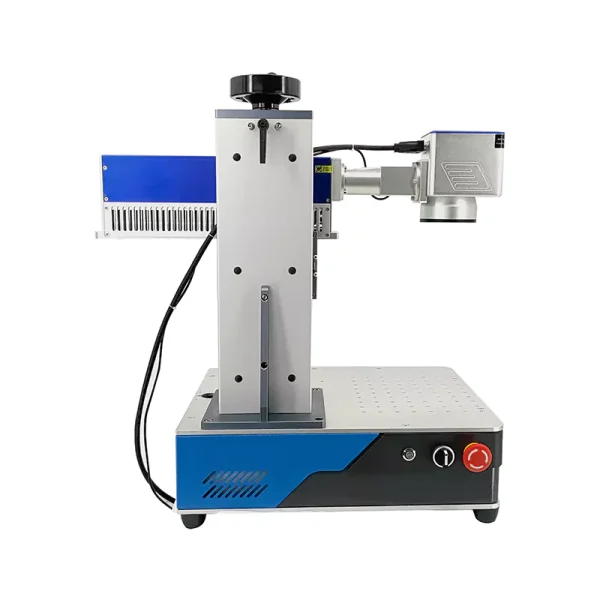
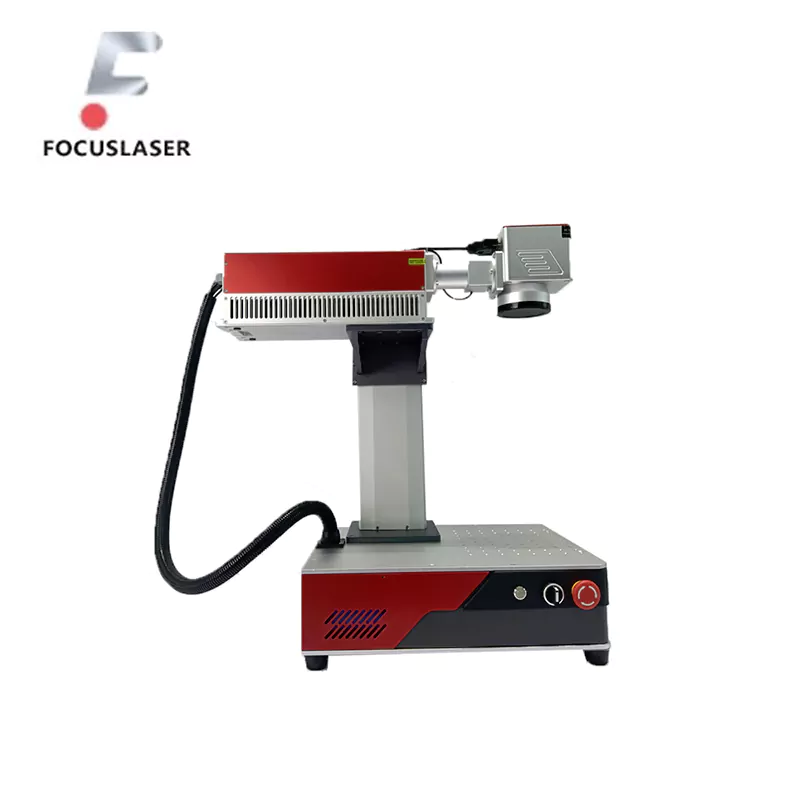
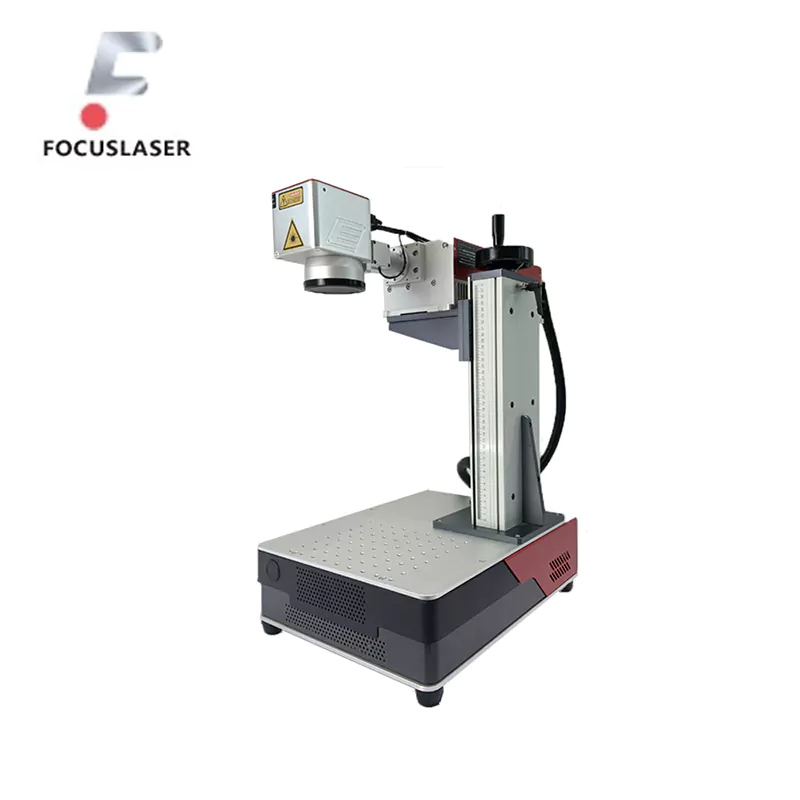
Behind the UV laser device’s impressive performance is a well-engineered design that combines precision with durability. At the heart of these machines is a powerful 355 nm ultraviolet laser source, which produces the fine laser beam necessary for high-resolution marking. This shorter wavelength allows the laser to achieve “cold marking,” which keeps heat levels low and prevents damage to sensitive materials. Let’s break down some of the core components that make this possible.
- Laser Source and Beam Focusing System
The UV laser’s 355 nm wavelength allows it to focus to an exceptionally small spot size, achieving micron-level precision. This is crucial for applications that require intricate details or small text, such as barcodes on circuit boards or serial numbers on medical instruments. The beam focusing system plays a big role here, directing the laser with pinpoint accuracy to produce consistent, high-quality marks across various materials. - Sistema de resfriamento
Since laser UV machines operate at high speeds, they generate heat during the marking process. To maintain stability, most machines use either an air or water cooling system. Water cooling is generally used for higher-powered models, while air cooling is common in lower-power setups. Both systems help control temperature, which extends the machine’s lifespan and ensures steady performance over long production runs. - Control Software and User Interface
Advanced laser UV machines come with customizable software interfaces that allow operators to adjust parameters, like marking depth, line thickness, and even font style. This level of control ensures that the machine can be fine-tuned to meet specific production needs. Adicionalmente, most models integrate easily with automation systems, which means they can work in sync with other production line equipment, increasing overall productivity. - Automated Part Handling and Positioning
For high-volume applications, automated part-handling options can be added to UV laser machines. These include features like conveyor systems or robotic arms that position each item precisely under the laser. Automated handling is particularly beneficial for industries like packaging, where thousands of products need to be marked quickly and accurately.
These technical features combine to make UV laser devices versatile, eficiente, and suitable for a wide range of applications. But to truly meet the unique demands of different industries, customization is key. Let’s explore how laser UV machines can be tailored to specific needs.
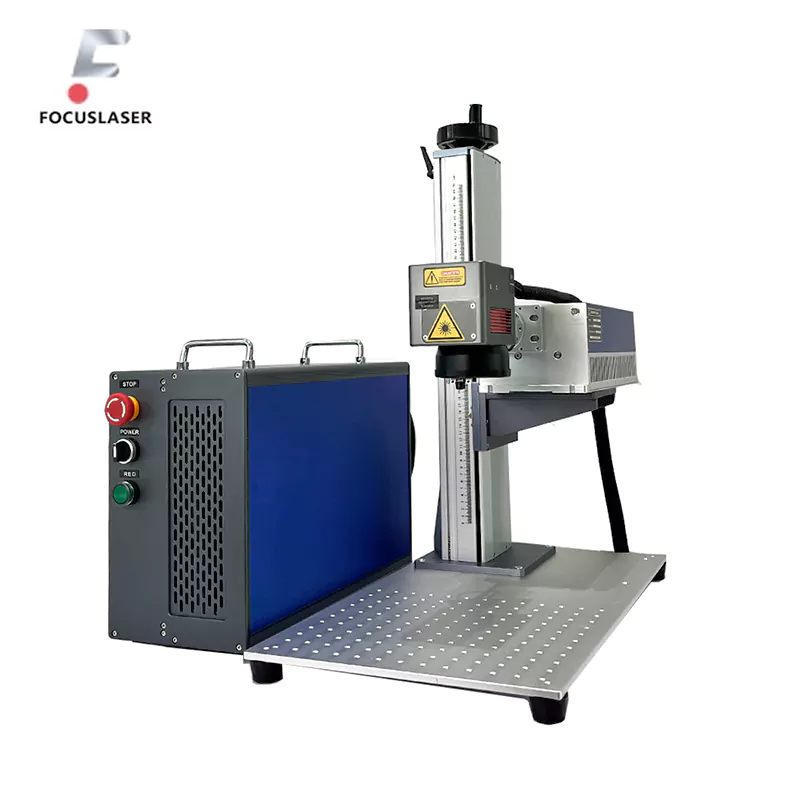
Customization Options for UV Laser Machines
One of the biggest advantages of UV laser technology is its ability to adapt to various industrial needs. Many manufacturers offer customization options that allow businesses to choose the right machine specifications for their production requirements. Here are some common ways UV laser devices can be customized:
- Power Output Options
UV laser machines come in various power levels, with models like 3W and 5W being the most common. Lower-powered machines, such as 3W models, are ideal for applications that require delicate markings on sensitive materials, like medical devices or electronics. Higher-powered models, like 5W, offer deeper marking capabilities and faster processing speeds, making them more suitable for materials that require durability, such as automotive parts or glass products. - Adjustable Work Area Sizes
Different applications may require varying work area sizes. Por exemplo, a jewelry manufacturer might only need a small marking area for engraving rings or pendants, while an automotive parts supplier might require a larger workspace to accommodate bigger components. Many UV laser devices allow users to adjust or expand the marking area to fit their specific needs. - Software Integrations for Process Control
Many UV laser machines are compatible with specialized software that allows for greater process control. This is particularly useful in industries where traceability is essential, like pharmaceuticals or electronics. Por exemplo, a UV laser device can be programmed to mark each item with a unique serial number, ensuring that every product is fully traceable. Some advanced models even offer remote monitoring capabilities, so operators can oversee the process from anywhere, increasing flexibility and oversight. - Specialized Marking and Cutting Heads
Em alguns casos, companies may require UV lasers for more than marking alone. Certain industries, such as automotive manufacturing, also use these machines for precise cutting and drilling. By integrating specialized heads that switch between marking and cutting, businesses can use one machine for multiple processes, reducing costs and improving efficiency. - Safety and Ergonomic Features
Customizable safety features are often available for companies with specific operational needs. Por exemplo, an enclosed workspace may be added to protect operators from UV light exposure, which is crucial in factories where machines run continuously. Other ergonomic features, such as adjustable stands or easy-access controls, can make the machine more user-friendly, boosting productivity while ensuring safety.
By offering these customization options, manufacturers can help businesses select perfect UV laser machines that align perfectly with their production goals. This flexibility is a major reason why UV laser technology continues to gain popularity in various fields.
Maintenance and Troubleshooting Tips for UV laser devices
Like any advanced machinery, UV laser machines require routine maintenance to operate smoothly and consistently. Regular upkeep not only preserves marking quality but also extends the machine’s lifespan, making maintenance an important investment for any business relying on laser marking technology.
Keeping Optics Clean: Since UV lasers rely on high-precision optics, keeping these parts clean is essential. Dust, fingerprints, or other contaminants on the lens can distort the laser beam, leading to reduced marking clarity or even damage to the machine. Cleaning optics with approved materials, like optical wipes or specific solvents, can prevent these issues. For best results, it’s recommended to inspect and clean the optics regularly, especially in environments prone to dust or debris.
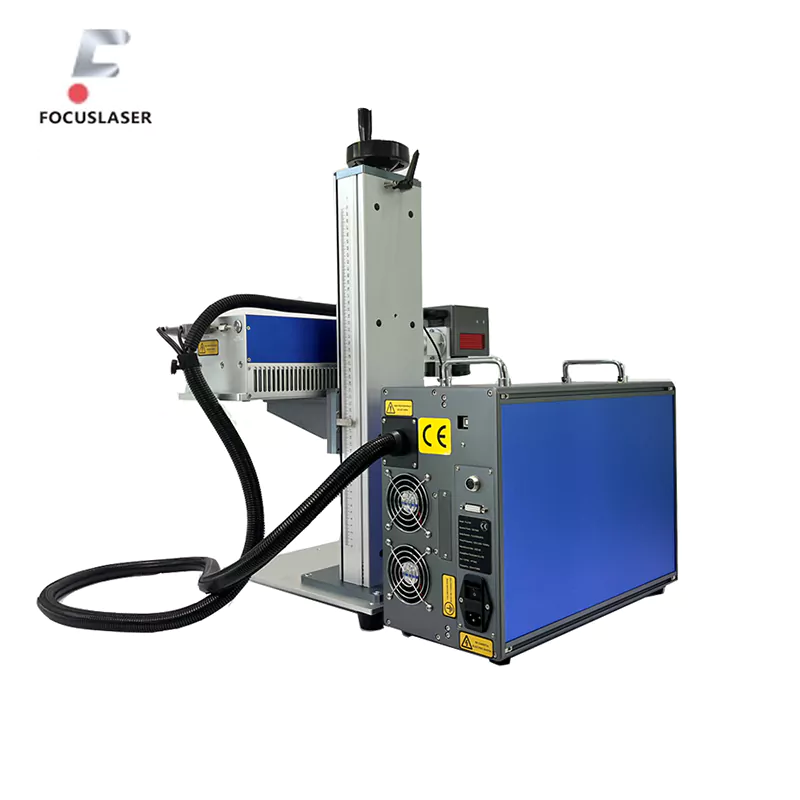
Cooling System Checks: Cooling is another vital component of a UV laser device. High-use machines, particularly those with powerful lasers, generate significant heat. Most UV laser machines come with either air or water cooling systems to keep temperatures in check. Monitoring these systems for signs of overheating or leaks is critical. For water-cooled systems, it’s important to check the water levels and replace it as needed to prevent overheating, which could impair the machine’s performance.
Software and Calibration: Many issues can be prevented by updating the machine’s software, as manufacturers often release updates to improve performance or add features. Regular calibration is also key to maintaining precision. Ao longo do tempo, slight shifts in laser alignment can affect marking accuracy, so periodic recalibration helps keep the machine operating at its best.
Troubleshooting Tips: Common issues can often be resolved by checking the power settings, verifying software configurations, or adjusting the focus. Keeping a troubleshooting checklist on hand helps operators resolve minor problems quickly, reducing downtime and ensuring production continuity.
By following these maintenance tips and handling small issues early, businesses can keep their UV laser machines running efficiently, ensuring the reliability needed for continuous, high-quality output.
Future Trends in UV Laser Technology
As industries embrace automation and precision tools, UV laser technology continues to evolve. Several emerging trends promise to enhance the capabilities of high-end UV laser machines, opening doors to new applications and making them even more appealing for diverse manufacturing needs. The advancements in UV laser technology demonstrate the industry’s commitment to adaptability, eficiência, and sustainability. As these machines continue to evolve, they’re likely to play a larger role in various fields, bringing the benefits of UV laser precision and durability to more applications than ever before.
Conclusão
UV laser machines have revolutionized modern manufacturing by combining precision, durabilidade, e adaptabilidade. From electronics to automotive parts, jewelry to food packaging, these machines deliver consistent, high-quality results across a broad spectrum of materials and applications. And thanks to the range of customization options available, businesses can tailor UV laser technology to fit their exact needs, ensuring maximum efficiency and a strong return on investment.
As industries evolve and new materials emerge, the demand for UV laser marking is only expected to grow. With advancements in technology, these machines will likely continue expanding their capabilities, bringing even more innovative solutions to the world of precision marking.
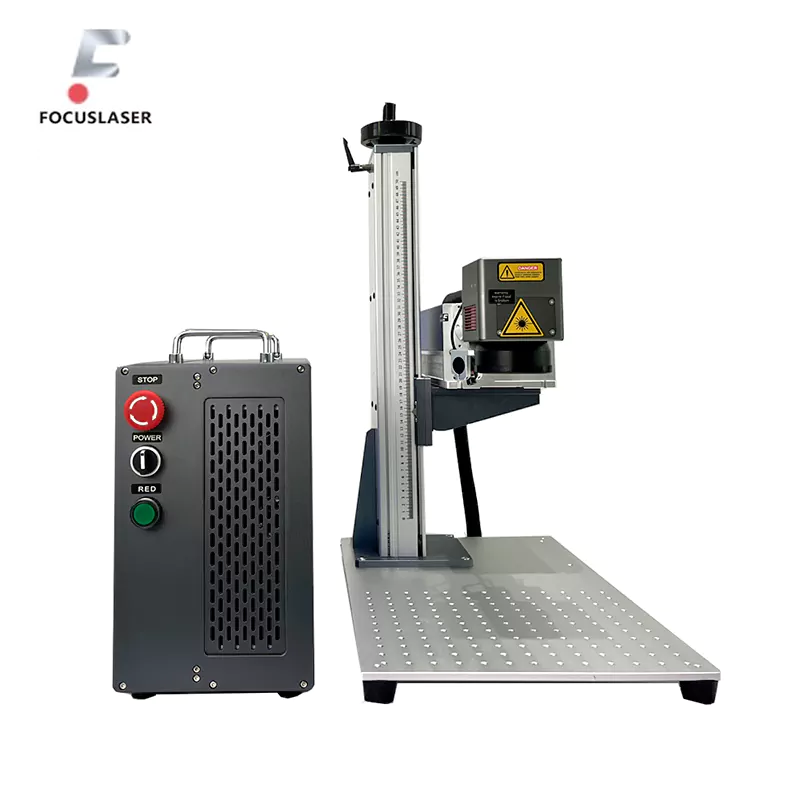
Are you ready to Discover the Right UV Laser Solution for Your Needs?
Whether you’re in electronics, dispositivos médicos, automotivo, or any other industry needing precision and durability, a UV laser machine can transform your production line with high-quality, efficient marking. Explore our full range of UV laser machines here to find the model that fits your unique requirements.
Have questions about a specific model, customization options, or how UV laser technology could benefit your business? Contact us today to speak with our knowledgeable team, who are ready to help you make an informed decision. Reach out through our Contact Us page, or call us directly at our listed number. We look forward to assisting you in finding the perfect solution for your production needs!
