
Introduction
Portable fiber lasers are powerful tools applied in a few industries, manufacturing, and health sectors. They serve to mark, engrave, and cut different types of materials: metals, plastic, and ceramic. What differentiates them from standard machines is that they are compact and easy to move; thus, they are ideal for companies that require flexibility around workspaces.
When it comes to choosing a portable fiber laser, there are a few performance metrics that are very important to understand. These include speed, precision, and depth control. The speed will determine how fast the laser can mark or engrave an item; this would be vital in meeting the high production demands.
Preciseness will come in handy in determining the quality of the marking, especially complex designs. The more important aspect of depth control is that it allows the users to adjust how deep into a material the laser cuts, which is sometimes crucial for durability and visibility purposes.
In this guide, we will elaborate in detail on each of these metrics: how they reflect performance, what factors are influenced by it, and give some tips for making the best choice of portable fiber laser for your needs. If you know what each of these metrics means, you can make a competent decision toward finding the perfect tool for your business.

What Are Portable Fiber Lasers?
Portable fiber lasers are cutting-edge laser systems developed in such a way as to be moved with and, at the same time, flexible. Unlike larger and stationary laser machinery, portable fiber lasers are compact and fit for those businesses that need to operate in various locations or have space constraints.
They find application in several industries that range from electronics and automotive to health care, where they are normally used for marking, engraving, and even cutting a wide range of materials, which include metals, plastics, and ceramics.
The word “fiber” in fiber lasers indicates their type of laser source. Fiber lasers send laser light via a particular optical fiber, making them more effective and consistent than other types of lasers. They are known for producing high-quality, precise markings and engravings, for which they need strong, focused beams that can work with speed and precision on various materials.
One of the most salient advantages of portable fiber lasers is their flexibility. Smaller and easier to move, these lasers can be applied in various settings, from factories to outdoor worksites. They can become quite popular because of their low maintenance needs and long-lasting laser sources. Compared to other lasers, the energy consumption by fiber lasers is lower, which contributes a lot to cost savings over time.
Another major highlight of portable fiber lasers is the accompanying advanced software that can enable the user to manipulate the laser settings easily. This advanced software allows you to change the speed, precision, and depth of marking based on your needs, making it perfect for both simple and complex jobs.
Portable fiber lasers are thus a combination of flexibility and preciseness combined with ease of operation, making them among the best options for businesses chasing quality production processes effectively.
Key Performance Metrics of Portable Fiber Lasers
In the case of portable fiber lasers, which are big in governing the performance factors that make a difference, there are speed, precision, and depth control. While all these metrics define the usability of the laser, they also indicate the performance of the laser through marking, engraving, and even cutting. Each one is critical in its own right; together, they create a tool capable of managing a wide variety of tasks across diverse industries.
Speed refers to the ability of businesses to mark or engrave a large number of items in a short time. The faster a laser’s working speed, the more time it saves, and the higher the production rate for companies receiving high-demand orders.
Precision in this field denotes the accuracy of the laser. High precision is important in detailed designs, such as logos or small text, where clarity and sharpness matter.
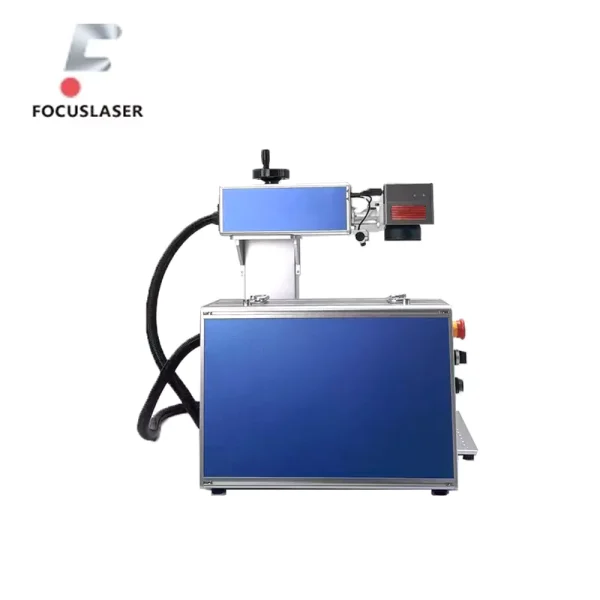
Depth control determines how deep a laser can mark or engrave into a material. It is applicable in making permanent marks that might be durable and well in view.
These three performance metrics will help an enterprise understand how to make the right decision for a high-quality portable fiber laser that would work for them, keeping in mind both quality and speed.
Speed of Portable Fiber Lasers
The most critical variable relating to portable fiber lasers for companies that need to mark or engrave items quickly is laser speed. It is how fast the laser can move along the material to make a mark, measured in millimeters per second. The speedier the laser, the more pieces can be processed within a very short duration, which is of immense value in high-production environments such as manufacturing plants.
Why Speed Matters in Laser Marking and Engraving
When a fiber laser works at high speed, it concludes tasks within a short period, hence saving a lot of time and improving productivity. It is crucial in companies working with big volumes of products or in situations associated with tight deadlines.
For instance, in industries such as electronics or automotive, serial numbers, company logos, or other information needs to be marked on pieces. Since the laser quickly marks such pieces, the production chain goes fast, therefore helping to comfort demands by reducing the time needed to wait in queues.
High-speed marking also helps with soft materials that would require no deep engravings. Since the laser only requires a little power on softer materials to provide a clear mark, it can go faster without losing quality in such situations.
Factors that Affect Laser Speed
Several factors influence how fast a portable fiber laser is. Laser power is one of the key issues. Generally, the higher the power-for example, 30W or 50W-the faster the ability to mark. That is so because high-power lasers have stronger beams, which can make quick, clear, and lasting marks.
The material type will also be a determining factor in laser speed. Not all materials react the same to laser beams. Where a metal such as aluminum or steel may need a slower speed to get a good strong mark, softer materials like some plastics could mark faster. It means that projects entailing various materials could require changes in the settings of laser speed.
Another factor affecting the machine about its resolution is beam quality. Beam quality refers to what is called the “M ² factor.” A laser with high-quality beams means lower values of the M ² factor. They can thus give more focused beams that can be marked with greater detail and at higher speeds. With a higher-quality beam, the laser will work efficiently without losing sharpness when set to higher speeds.
Applications Where High Speed is Essential
High-speed laser marking is an indispensable technology in many industries where time is of the essence. For example, packaging companies need to mark thousands of items in the shortest amount of time, which very well falls in the scope of a high-speed-capable laser, keeping production lines moving without delays.

Marking at high speed is applied in the automotive industry to engrave serial numbers on parts. As the parts are manufactured en masse, marking should be fast enough to keep pace with the production rate. The tools and devices in the medical field also require marking for identification, many times on an industrial scale.
Example Products with High-Speed Features
Some portable fiber lasers deploy advanced technologies to ensure top speed in their design. Several lasers have cooling systems that protect them from overheating and can work even longer and faster. Other models use pulse optimization – a feature controlling the way a laser pulses onto the material, allowing it to move at higher speeds without loss of quality.
One must look for a laser model balancing the speed with precision. Once these features of the speed are known, a business can find a laser that best fits the production requirements efficiently.
Precision of Portable Fiber Lasers
Precision is another important factor involving powerful portable fiber lasers, especially for jobs requiring fine details. Precision, in this view, means how well the laser can mark or engrave a material accurately without giving room for even errors. It is measured in millimeters, mm, or micrometers, µm.
Where the laser is said to be precise, well-defined sharp lines and shapes could be achieved even in very minute areas. It is vital in those industries that call for absolute precision, like in manufacturing electronic devices, medical appliances, and jewelry, where even a single missing dot may mean a lot.
Why Precision Matters in Laser Marking and Engraving
Precision during marking or engraving in complex designs allows lines and curves to turn out sharp and clear. For instance, if a laser marks the logo or barcode on a product, the details must be easily readable and professional-looking. Precision is also key in making small text or detailed patterns.
Only some things that could be improved in precision might be very serious in such a field as medicine, where a tool has to be marked with some specific code or number. High precision also results in generally high quality and better aesthetic appearance of the product, which can impress customers.
Factors That Affect Laser Precision
Quality is one of the major factors in precision-the quality of the laser beam. The beams produced by high-beam quality fiber lasers, measured through a low M² factor, would result in much finer details. A well-focused beam cuts only where it has to, and that does not allow mistakes to be made. It is what provides accuracy, clearness, and sharpness in markings.
The other aspects deal with the stability of the laser system itself. A stable laser system reduces jitters or movement that may interfere with accuracy. For example, any laser engraver or marker working on uneven surfaces or under constant vibration may have its precision affected. Ensure the laser selected has a stable design, ensuring clarity and consistent markings even after continuous use.
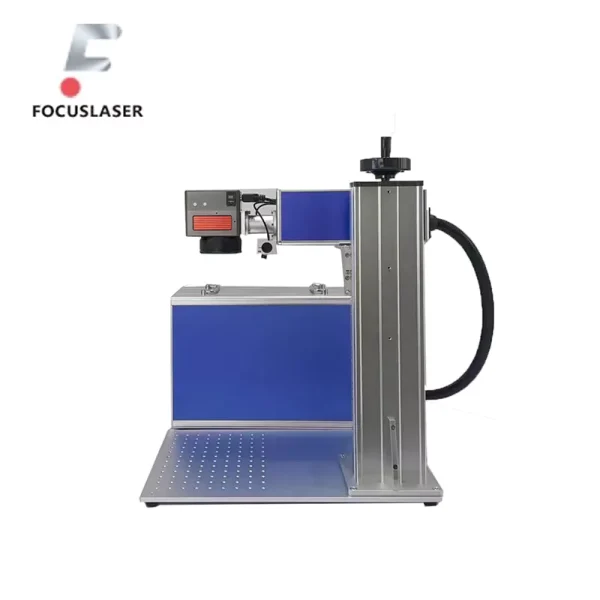
The control software also contributes to high precision. Advanced laser systems boast friendlier software that allows operators to make fine adjustments in the settings of the lasers. Precise control over speed, focus, and power enables operators to mark even the smallest details with ease. At the same time, high-quality software can include options like previewing the design before actually marking it to avoid mistakes.
Applications Where High Precision Is Essential
High precision is required in industries where accuracy is essential to function and appearance. Precision in the medical field involves marking surgical tools or implants with serial numbers or identification codes. These marks must be highly accurate since their errors may result in mistaken identification or misuse of medical equipment.
In electronics, marking minute parts such as circuit boards and chips requires precision. Often, such parts have very minute, detailed markings to trace the components or their specifications. For anything wrong that happens to a markup, it may create an assembly or performance problem in the product.
Other examples where precision is an issue include jewelry engraving. Engraving small text, symbols, or intricate designs in jewelry requires a laser capable of handling minute detail. Customers expect quality results, and precision ensures that each engraving will be clear and attractive.
Example Products Known for High Precision
Most portable fiber lasers are designed precisely for precision. Indeed, some have high-class beam quality settings combined with highly stable design features; this ensures that the marking is made as accurately as possible each and every time.
For example, lasers at the front with extended cooling systems and beam stabilizers enable the laser to retain its focus and accuracy. Also, most of them have software that enables users to change minute settings of the laser, so they get perfect results for any particular job.
If one has to choose the laser for high precision, then he has to give a view of features supporting detailed markings. The right choice will enable business persons to produce clear, professional markings that will raise the quality and reliability of their products accordingly.
Depth Control in Portable Fiber Lasers
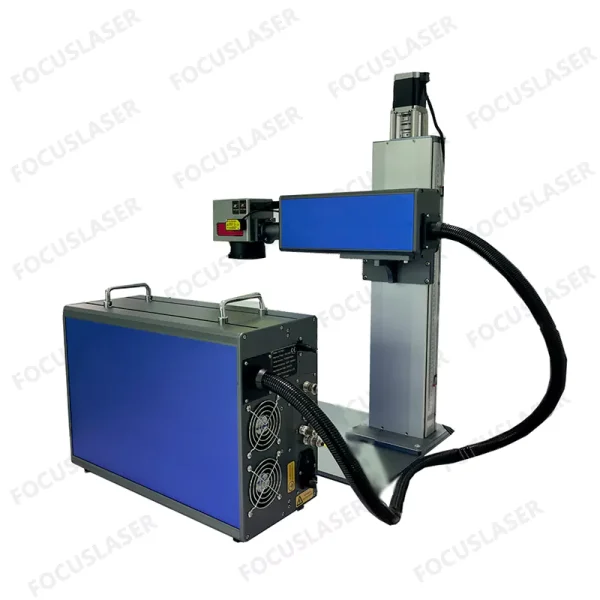
It is an important feature in portable fiber lasers, considering that some projects require different engraving depths. Depth control refers to adjusting the depth at which a laser engraves or marks a particular material. Some projects will want a light surface mark, while others might want deeper engravings that may last longer, even with wear and tear. It helps users fine-tune the marking depth of a laser with each particular job in mind.
Why Depth Control is Important
Control over depth is important for a number of reasons. First of all, it enables businesses to create durable markings that will not be able to fade or wear off easily. For example, such industries as aerospace or automotive require parts to have permanent markings so they can be identified throughout their whole life cycle. The deeper the mark is, the more it is possible to create permanent engravings that would be readable even in bad conditions.
Second, the depth control affects the visibility and readability of the mark. The deeper the mark is, the easier it is for a person to see and read from a distance, which is important in the case of barcodes, serial numbers, or safety instructions. It will be useful in manufacturing or industrial environments where parts must be identified quickly.
Thirdly, the control of depth allows flexibility because the ways of dealing with the materials can differ. For example, a shallow engraving might be enough when marking soft materials such as plastic. Still, a mark must be deeper with harder materials, like metals, to become visible and durable. That is why cutting-edge portable fiber lasers can be adapted for an appreciable amount of tasks within various types of industries.
Factors That Affect Depth Control
Laser power is the major factor determining the depth of engraving or marking, including laser power. Higher-powered lasers, such as 30W and 50W, can go deeper compared to lower-powered lasers. When a high-powered laser is used, the beam is stronger and can penetrate more layers in the material for deeper markings; this is important in applications where a permanent heavy-duty mark needs to be imparted.
Pulse Duration also affects depth. Portable fiber lasers have variable pulse duration settings determining how long each laser pulse strikes the material. The shorter the pulse, the lighter the mark; the longer the pulse allows more time to cut deeper into the material. It can let a user change the pulse duration to control the depth of the laser engraves, creating both light and deep engravings using the same machine.
Material Type: This is also another determining factor in the depth. Different materials react to laser engraving differently. For instance, metals such as steel or aluminum require higher power and longer pulses for deep engraving, while materials such as plastic or wood may not require high power or pulse length. Knowing the material type helps adjust the laser to the right depth for each job.
Applications Where Depth Control is Essential
Depth control has become important for many industries where durability and readability matter. Engravings in the automotive and aerospace industries are usually deep and should be able to withstand extreme temperature conditions, wear and tear, and exposure to chemicals. Deep engravings on parts make them identifiable and traceable even after years of use.
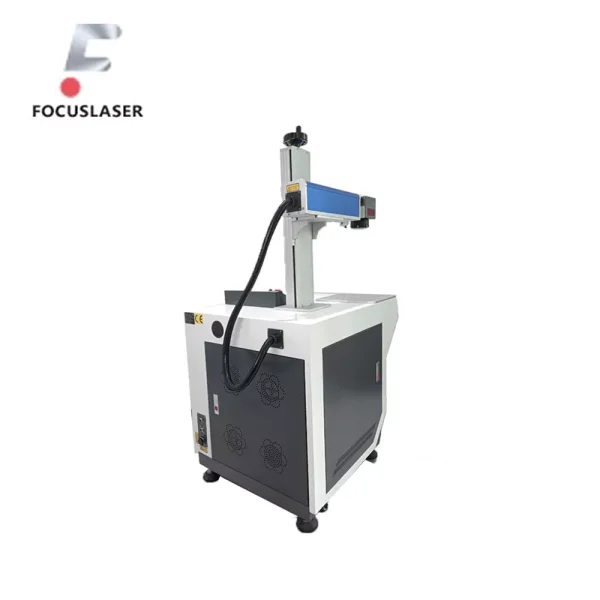
In the field of industrial manufacturing, depth control is used to apply permanent serial numbers, logos, or safety information on equipment or tools. These markings need to be highly visible and durable, not being worn out with time due to heavy use.
It is also valuable for depth control in the jewelry industry, where customers may request custom engravings performed on rings, bracelets, or pendants. While some customers want delicate surface designs, others prefer deep engravings that are outstanding and durable.
Example Products with Depth Control Features
With many good, portable fiber lasers, advanced depth control is possible. These lasers adjust power level, pulse duration, and focal distance quite easily to control the depth of every engraving.
Pre-set options are available in certain models according to different materials for user needs and let one choose appropriate depth without complex adjustments. In this way, businesses will be confident that by choosing a laser with reliable depth control, they will have the flexibility to handle all sorts of projects, from light surface marks to deep permanent engravings.
Depth control is an important feature that makes portable fiber lasers useful in many industries and for many applications.
Unique Features of Focus Laser’s Portable Fiber Lasers
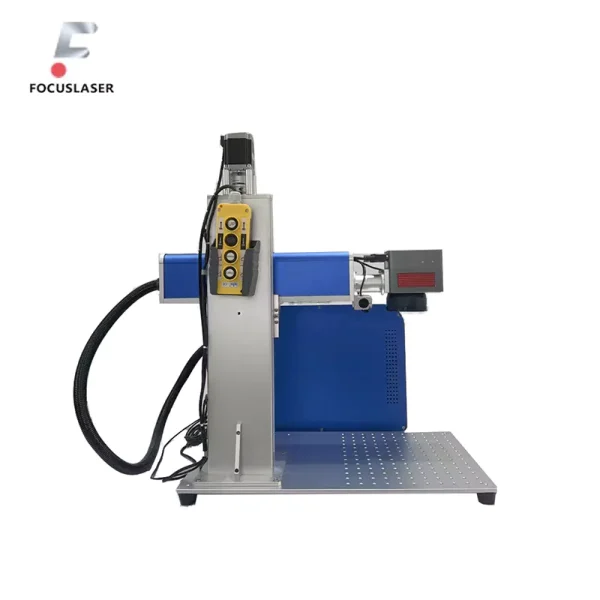
Therefore, Focus Laser portable fiber lasers are precisely engineered to the ultimate structure essential for manufacturing, electrical industries, and healthcare. These lasers contain distinctive features that make them unique among many competitors in terms of speed, precision, and depth control. Let’s look at what makes the products from Focus Laser such a strong choice for businesses.
High-Speed Performance
Focus Laser has designed portable fiber lasers with fast marking to increase production without compromising quality. The marking speed could go as high as several thousand millimeters per second, so large batches of parts can easily be processed using the laser. It will also form an excellent opportunity for companies with high demand, as with increased marking speed, more products can be used within a short period.
Excellent Precision
One of the major strong points of Focus Laser products is precision. The lasers are designed with a high-quality beam and advanced control system that enables them to engrave with great detail and a high degree of accuracy. It makes them ideal for applications needing fine details, such as electronic components or medical tools. Customers can be assured that every marking will be sharp and consistent, even on small surfaces.
Adjustable Depth Control
Products by Focus Laser also provide adjustable depth control, enabling users to set the engraving depth to suit their requirements. Be it a lightweight surface mark or a deeper permanent engraving, these lasers give you the flexibility to adjust settings with ease. In particular, this is useful when durability and readability become an issue in certain industries.
Overall, Focus Laser’s high-end portable fiber lasers combine high-speed performance with precision marking and flexible depth control, hence making them a reliable choice for businesses to improve productivity and quality in their operations.
Conclusion
Understanding the performance metrics of portable fiber lasers is a matter of speed, precision, and depth control. Each one plays a huge role in how fast and precisely it produces depth. The speed will go faster for your productions; the precision will bring detailed markings, and depth control gives options for different materials and durability needs when choosing the right machine for your business.
Considering these factors in conjunction with complementary features that include portability, software compatibility, and maintenance, you can choose the perfect portable fiber laser. Focus Laser designs its products to assure high-class performance and ease of use that will save business time and improve results.
Call to Action
Ready to boost your productivity with a top-performing portable fiber laser? Discover the difference Focus Laser can make for your business. Visit Focus Laser’s Contact Page today to speak with our experts and find the perfect laser solution for your needs!
